By Gary Pratten, Founder of My Local Trades
I've been building websites and working in SEO for tradespeople since 2008.
A short note on how this article was created
I'm writing this myself, drawing on 18 years of building websites for electricians, plumbers, builders and other trades. I've referenced Google's official Creating helpful, reliable, people-first content guidelines throughout the page was last updated 10 December 2025. The two AI tools mentioned at the end were built by my team after watching dozens of our customers struggle with AI-generated content that didn't rank. No AI was used to write this article.
I'm telling you that upfront because Google now specifically asks creators to disclose how content was made. It's the right thing to do — and it's also the first thing this article is about.
I had a call with an electrician last month who was panicking. His traffic had dropped by 40% over six months. He'd been doing everything the seo agency told him, publishing 4–5 AI-generated blog posts a week, all keyword-optimised, all "SEO-friendly". His rankings were collapsing in real time and nobody could tell him why.
When I looked at his site, the answer was obvious. His content was technically correct, well-structured, and completely indistinguishable from every other electrician's AI-generated blog. There was nothing in any of it that proved he'd actually been an electrician for 12 years. Google had stopped rewarding him because, as far as their systems could tell, his site was just another node in the AI content flood!
This article explains what's actually changed at Google, what they're now looking for, and what tradespeople need to do about it. It's based on Google's own published guidelines, not my interpretation of them.
What E-E-A-T actually stands for
E-E-A-T is Google's framework for evaluating content quality. It stands for:
- Experience — first-hand, real-world knowledge of the topic
- Expertise — demonstrable skill or qualifications in the subject
- Authoritativeness — recognition as a credible source
- Trustworthiness — accuracy, transparency, and honesty
Google added the first "E" — Experience — in December 2022. That single addition is the reason most AI-generated trade content has stopped ranking. AI can fake expertise (it can quote regulations), authority (it can cite sources), and even trust signals (it can sound confident). What it cannot fake is genuine first-hand experience of having actually done the work.
"Of these aspects, trust is most important. The others contribute to trust, but content doesn't necessarily have to demonstrate all of them."
For tradespeople, Experience is the unfair advantage. You've been on real jobs. You've diagnosed real faults. You've seen what cowboys leave behind. AI hasn't!
Why this matters more for trades than almost any other industry
Google has a category called YMYL, Your Money or Your Life. It covers any topic that could significantly impact someone's health, financial stability, safety, or wellbeing. Trade work falls squarely into this category because the work directly affects safety. A faulty consumer unit installation can seriously injure or kill someone. A poorly fitted boiler can leak carbon monoxide. A botched roof can flood a family's home.
Google holds YMYL content to a substantially higher standard than other content. Their guidelines state:
"Our systems give even more weight to content that aligns with strong E-E-A-T for topics that could significantly impact the health, financial stability, or safety of people."
In practical terms, this means generic AI content that might rank fine for "best holiday destinations" will absolutely struggle for "consumer unit upgrade Liverpool". Google's bar is higher because the stakes are higher. Most tradespeople don't realise this, and they pay the price in lost rankings.
The Who, How, Why framework Google now uses
In their current guidelines, Google explicitly recommends evaluating content using three questions: Who created it, How was it made, and Why does it exist. This is the structure their quality raters use, and it's the structure their automated systems are designed to detect signals for.
Who created the content
Google specifically asks: "Is it self-evident to your visitors who authored your content? Do pages carry a byline, where one might be expected?"
For trade websites, this means your blog posts should clearly show who wrote them, ideally the business owner or the trade themselves. An anonymous blog post on an electrician's site with no author attached is a red flag to Google's systems. A post by "Paul Higgins, NAPIT-registered electrician with 30 years of experience in Liverpool" carries authority that no AI can manufacture.
How the content was created
This is the section most agencies skip and it's now critical. Google's guidelines explicitly cover AI-generated content here: "If automation is used to substantially generate content, here are some questions to ask yourself: Is the use of automation, including AI-generation, self-evident to visitors through disclosures or in other ways?"
Google does not penalise AI content for being AI-generated. They've said this repeatedly. What they penalise is AI content that's hidden, mass-produced, and adds no human value. The "How" matters. A blog written by an electrician using AI as an editing aid is fundamentally different from a blog generated by AI with no human input, even if the words on the page look similar.
Why was the content created
This is the question Google says matters most. From their guidelines: "The 'why' should be that you're creating content primarily to help people, content that is useful to visitors if they come to your site directly. If the 'why' is that you're primarily making content to attract search engine visits, that's not aligned with what our systems seek to reward."
If you're publishing trade content because you want to rank, Google's systems are now sophisticated enough to detect that intent. If you're publishing because customers genuinely need the information, you're aligned with what Google rewards. The difference shows up in the writing itself.
What people-first content looks like for a tradesperson
Google's guidelines list five questions that indicate people-first content. I've translated each one into what it means specifically for a trade:
- "Do you have an existing audience that would find your content useful?" Are you writing for the homeowner who's just smelt burning from their fuse box, or for Google's algorithm?
- "Does your content clearly demonstrate first-hand expertise?" Does the article reference real jobs you've done, or does it read like it could have been written by anyone with internet access?
- "Does your site have a primary purpose or focus?" A clear local trade specialism beats a generic "we do everything" site every time.
- "After reading, will someone leave feeling they've learned enough?" Or do they need to search again because the article was vague filler?
- "Will the reader feel they've had a satisfying experience?" Does it feel like a conversation with an expert, or a webpage trying to game keywords?
The simplest test I give my customers: read your latest blog post aloud to your partner. If they say "that doesn't sound like you," it's not people-first content.
Where AI fits — and where it doesn't
I want to be balanced about this. AI is genuinely useful for tradespeople if used properly.
✓ AI is good at
- Structuring content that's easy to read
- Catching grammar and spelling issues
- Generating comprehensive coverage of a topic quickly
- Producing first drafts that save hours of staring at blank pages
✗ AI cannot replicate
- Genuine voice, the warmth, humour or directness that makes someone you
- First-hand experience, the real story of last Tuesday's call-out
- Tribal knowledge, the kind of detail only someone who's been on a thousand jobs notices
- Honesty about complexity, AI often oversimplifies because it sounds more confident
The mistake most tradespeople make isn't using AI. It's using AI as a ghostwriter rather than as an assistant. The content goes from prompt straight to publication with no human input. That's the content Google demotes and that's the content customers can spot a mile off.
A practical workflow that actually works
Here's the workflow I now recommend to every customer who wants to write their own content:
-
Start with a real job
Open your phone and record a 2-minute voice memo after a call-out. Date, area, problem, what you found, how you fixed it. No script, just talk.
-
Use AI to structure the draft
Feed the voice memo transcript into ChatGPT or Claude with a proper prompt that asks for first-person, experience-led writing. We've built free location prompt and service prompt generators that do this automatically, they bake the E-E-A-T requirements into the prompt itself.
-
Edit ruthlessly
Read every sentence. Cut anything that sounds like AI. Add your voice back in. Keep specific details, brand names, exact times, what the customer said.
-
Add real photos
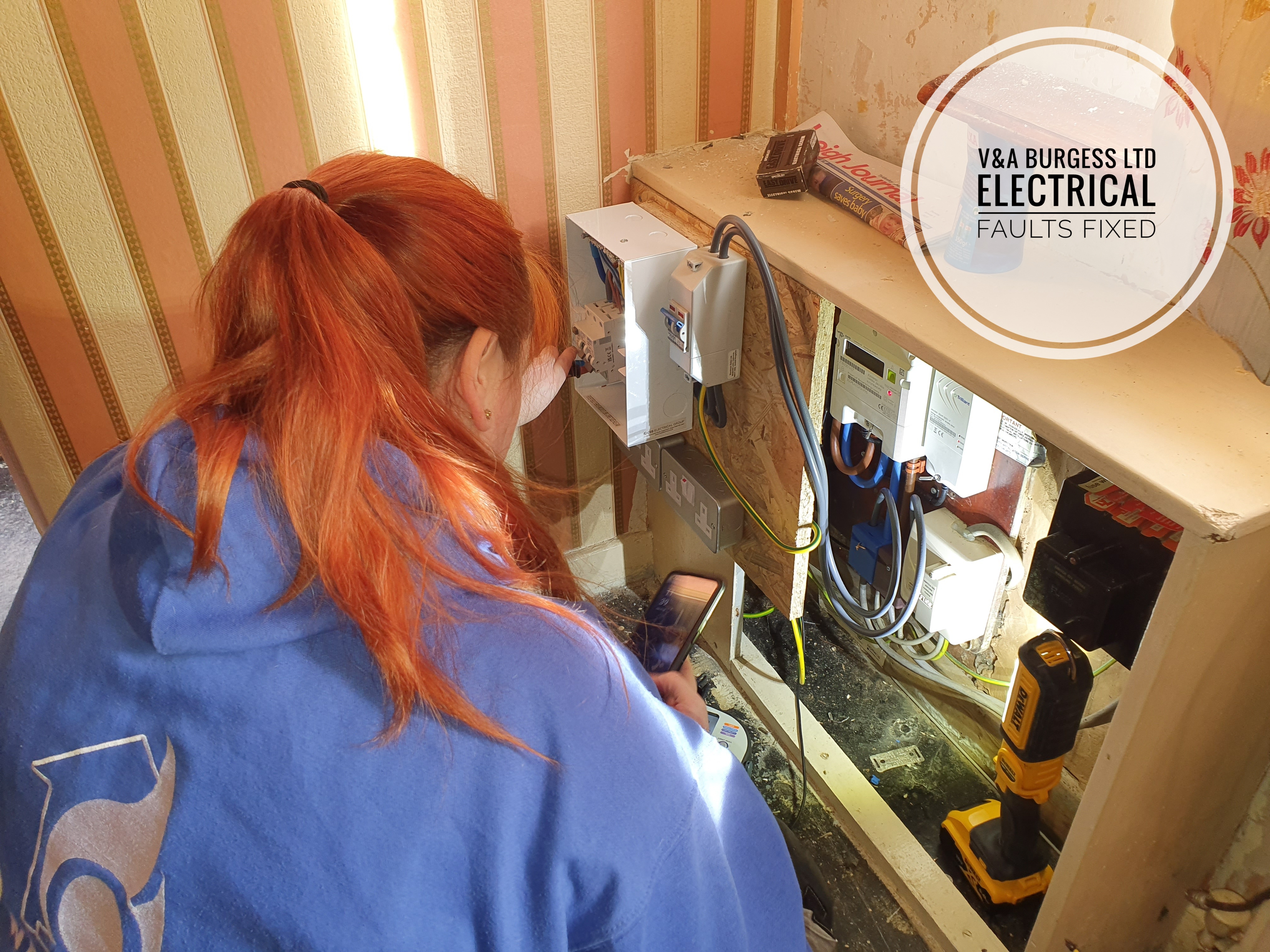
Phone photos from your actual job, with proper alt text. This is direct Experience evidence Google can see.
-
Publish with the author byline visible
Make it clear who wrote it.
This is a sustainable workflow. It produces content that ranks because it deserves to rank, not because it tricked Google in the short term!
What this means for your website right now
If you're a tradesperson reading this and your traffic has dropped over the last 12–18 months, the most likely cause is that your content has stopped demonstrating E-E-A-T at the level Google now expects for YMYL topics. The fix isn't to publish more content, it's to publish content that's genuinely yours.
Three honest questions to ask yourself:
- If a stranger read your last five blog posts, would they know they were written by an experienced tradesperson or someone who works directly in the trade business, or could they have been written by anyone?
- Do your service pages reference real jobs you've done, or do they list services in a way that's identical to every competitor's site?
- Does your About/home page make it clear who you are, what you've done, and why customers should trust you with their home?
If the answers are uncomfortable, that's the work. Google didn't change its mind to make life harder for tradespeople. It changed because the web was being flooded with AI-generated trade content that wasn't helping the people searching for it. The tradespeople who lean back into their genuine experience are the ones who will rank in 2026 and beyond.
Free tools to help you do this properly
We've built two free tools designed to bake E-E-A-T into AI-generated content from the start:
Both tools are free, both have a clear disclaimer about how to use AI properly, and both produce prompts you can paste straight into ChatGPT, Claude, or any AI writer. They are not a replacement for human-written content — they're a structured way to use AI so it actually produces content that ranks.
If you'd rather skip the AI route entirely and have a real human writer produce your content, get in touch that's what we do.
This article was written by Gary Pratten, founder of My Local Trades. We've built websites for hundreds of tradespeople since 2008, primarily electricians. If you found this useful, share it with a tradesperson you know who's struggling with their rankings.